
Do you need assistance?
+39 0423 975767
Contact our customer service team
Ask for our advice
Follow us

Tinning automotive sensors

INDUCTION - Automotive

Dual soldering of automotive temperature sensors with 3D Inductor

Precision and reliability in soldering sensors for the automotive sector thanks to innovative induction heating technologies with 3D-printed inductors.

At the core of every modern vehicle lies a complex system of sensors that constantly monitor a multitude of parameters. The precision and reliability of these sensors are crucial for ensuring vehicle safety and performance.

The 3D printing of customized inductors, providing tailored solutions for every need and optimizing the brazing process.
Induction heating ensures exceptional thermal precision, enabling the achievement of perfect and repeatable soldering.
Video
Play Video

Information about tinning of automotive sensors

The induction soldering process used to join automotive sensor components has been further optimized to allow for the simultaneous heating of two connections.

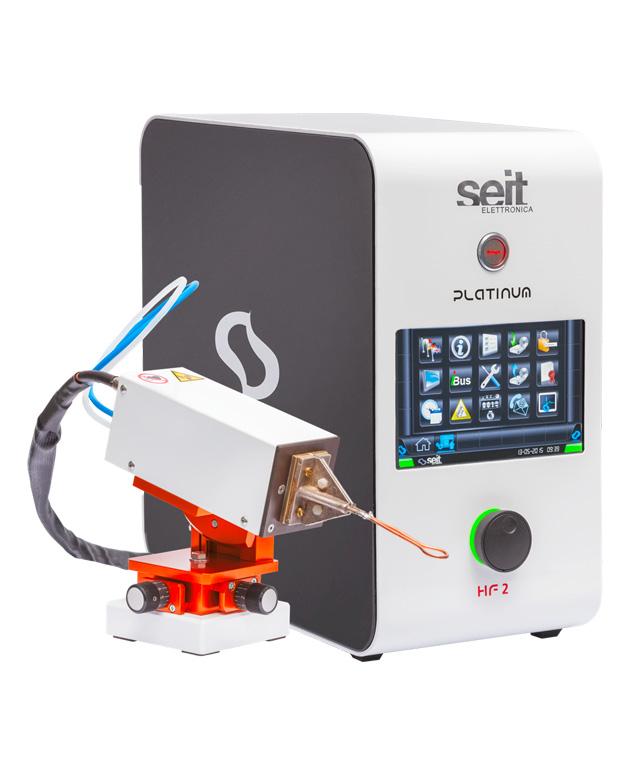
A crucial element of this innovative process is the inductor, specially designed and manufactured using 3D printing. The complex geometry of the inductor has been studied to concentrate the magnetic field generated by the Platinum HF3 generator (3kW) into two specific areas corresponding to the soldering points. This configuration allows both solders to be performed simultaneously, drastically reducing cycle times.

To perform the brazing, the following were used:

  • The Platinum HF3 high-frequency generator, with a power preset at 70%; 
  • An inductor made by 3D printing to concentrate the heating at the positions as precisely as possible.

The magnetic field induced by the inductor simultaneously heats both areas, melting the tin paste and creating the two connections in just 8 seconds.

  • a temperature reader connected directly to the generator set to control the temperature of 700°.

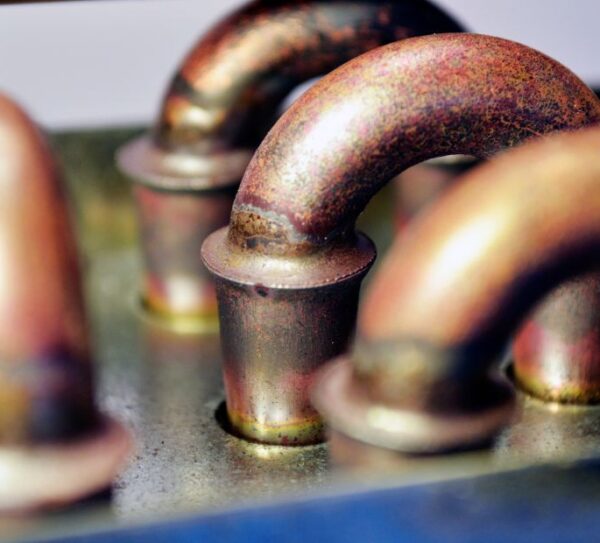
With a 7 second heating process, it achieves optimal alloy melting and induction brazing between banjo connectors and steel tubing.

This approach allowed the temperature to be precisely controlled throughout the entire brazing process, ensuring a robust and reliable connection between the connectors and the tubes. The use of temperature reader and the closed inductor, are the  fundamental tools to ensure the quality and effectiveness of the brazing.

Your ideal product is a direct result of aligning your needs with our advice.

The customer is our focus: it is the commitment to excellence that we carry forward at Seit Elettronica.

In our company we have always considered customers at the center of our development and sales processes. We are convinced, in fact, that only a methodical approach that brings out critical issues and needs within production processes generates added value and successful investments.

Unlock the full potential of your production

Ready to transform your production process? Contact us, and let's build something extraordinary together.

    I consent to the use provided data for all uses indicated in Privacy Policy

    Would you rather talk about it on the phone?
    News

    News

    bimu-2026

    BIMU 2026

    BI-MU 2026 Fiera Milano Rho SEIT Elettronica will be exhibiting at the 35th editi
    Read news
    Dettaglio di collettori in rame saldati con il metodo della saldobrasatura

    Copper brazing: process, alloys, and HVAC applications

    Copper brazing is the most common joining method in the construction of HVAC and
    Read news
    Copriletto realizzato con tecnologie di taglio laser galvanometrico

    Galvanometric laser: what it is, how it works, and why it is more precise than a Cartesian plotter

    Those who need to purchase a laser cutting and marking machine often find themsel
    Read news

    Subscribe to our newsletter and access exclusive content!