
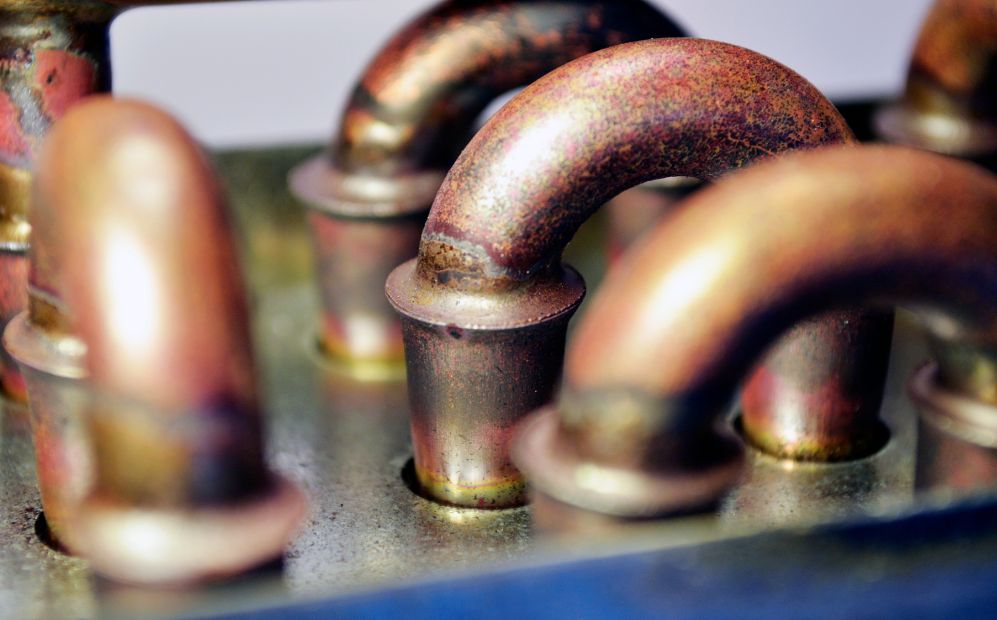
Copper brazing is the most common joining method in the construction of HVAC and refrigeration circuits: two fields that require a hermetic seal of the joint and process repeatability. Let’s look at how the process works, which filler alloys to use,…

Galvanometric laser: what it is, how it works, and why it is more precise than a Cartesian plotter
Those who need to purchase a laser cutting and marking machine often find themselves choosing between two very different technologies: the galvanometric system and the Cartesian plotter. In this article, we look at how a galvanometric laser cutting system works, what…

Induction heat treatments: steel hardening, tempering, annealing
Induction heat treatments, including hardening, modify the mechanical properties of steel thanks to rapid and controlled heating, followed by a cooling phase whose speed varies according to the treatment and the desired result. In this article, we explain how hardening, tempering,…

Laser Engraving: How It Works and Why Customization Is Key
Laser engraving allows permanent customization of objects and accessories, on an industrial scale or in small batches. In this article we explain how the process works and why personalization makes the difference in the market, also in terms of economic margins….

Copper induction tinning: techniques, industrial applications, SEIT technological solutions
Copper tinning is a surface coating process with tin alloy used in several industrial sectors. In this article, we describe the process and its functions, with an in-depth look at induction tinning and the advantages of the technologies developed by SEIT…

Precision laser cutting on fabrics and leather: the advantages of SEIT technologies
The precision of laser cutting on fabrics and leather is a strategic element to guarantee quality, repeatability, and reliability in cutting and embroidery processes within the textile, fashion, and footwear sectors. However, speaking generically about “precision” is not enough: it is…

Induction heating systems and generators: process and uses
Induction heating is a precise method using alternating magnetic fields to induce electric currents in the material generating heat. The equipment used for this process is typically called an induction heating system. These systems are integrated solutions consisting of a generator,…

Laser Leather Cutting: SEIT Advantages and Technologies for Footwear, Fashion, and Leather Goods
Laser leather cutting is increasingly utilized in industrial processes related to the production of footwear and fashion accessories. The ability to process natural and synthetic materials with high precision makes this technology particularly suitable for production contexts requiring repeatability, flexibility, and…

Brazing Flux: The Advantages of Effective Automatic Application
Sometimes considered an accessory element, flux actually performs an important chemical and physical function: preparing metal surfaces for joining, protecting them from oxidation during heating and ensuring proper adhesion of the filler metal. Consequently, understanding how flux acts, the difference compared…